
The use of Instagram threads voice notes to promote self-directed English-speaking learning among Vietnamese EFL learners
DOI:
https://doi.org/10.65956/ltlt.2026.13Keywords:
Instagram Threads, self-directed learning, voice notes, self-determination theoryAbstract
Grounded in Self-Determination Theory, this explanatory sequential mixed-methods study examined how Instagram Threads Voice Notes supports self-directed English-speaking learning among Vietnamese EFL freshmen. Fifty-nine first-year students completed a 17-item self-directed learning questionnaire before and after a nine-week intervention (eight weekly asynchronous Threads voice-note tasks). Ten purposively selected students were then interviewed. Pre-post comparisons on four subscales (goal setting, strategic planning, self-monitoring, independent practice) showed substantial within-subject effect sizes (paired d ≈ 1.0), reflecting increases in self-reported goal setting, planning, monitoring, and out-of-class practice. Interviews linked these changes to Threads’ asynchronous, re-recordable format and the platform’s familiarity, which supported learner autonomy and perceived competence; relatedness was less consistently experienced due to limited structured peer feedback. Results are associative rather than causal given the one-group pre-post design and reliance on self-report. Pedagogically, instructors might use familiar social-media affordances for low-stakes speaking practice while scaffolding goal prompts and guided self-assessment and supplying safe peer or instructor feedback. Future studies should use controlled designs, objective performance measures, and longer interventions to confirm and extend these findings.
INTRODUCTION
In today’s globalized educational landscape, proficiency in English communication is essential for academic success and professional development. According to Section III of the General Education Program for the English subject issued with Circular 32/2018/TT-BGDDT by the Ministry of Education and Training (MOET), the objectives of the program emphasize lifelong learning and learners’ communicative competence. Within this framework, English education is positioned not only as a means of language acquisition but also as a foundation for fostering learner autonomy, adaptability, and sustained engagement beyond formal classroom settings. In addition, the program seeks to provide students with a broad understanding of the countries, people, and cultures of English-speaking nations and beyond, thereby fostering positive attitudes toward these cultures and promoting values such as labour consciousness, career orientation, and adaptability in the context of the new industrial revolution. However, many Vietnamese EFL learners continue to struggle with speaking skills, hampered by limited classroom time, high anxiety, and a lack of structured opportunities for self-directed practice.
Despite widespread adoption of digital tools in reading and writing instruction, technology integration for speaking remains sparse. Traditional methods rarely allow learners to rehearse, record, and reflect on their oral performance independently, leaving a critical gap in autonomous language development. Instagram’s Threads app, a text-based platform by Meta, offers Threads Voice Notes, a feature that lets users record and share short voice messages asynchronously. By aligning with Gen Z’s preference for informal, voice-based communication, Threads Voice Notes provides a low-pressure, learner-centred environment for self-directed English-speaking practice, peer feedback, and ongoing reflection outside the classroom. Targeting English language teachers and tertiary-level EFL learners seeking practical strategies for promoting autonomous speaking development, this study investigates the use of Instagram Threads Voice Notes as a tool for self-directed English-speaking practice. Grounded in Self-Determination Theory, the study contributes theoretically by examining how autonomy and competence are supported through asynchronous voice-based tasks, and pedagogically by offering an accessible, learner-centred approach to extending speaking practice beyond the classroom in the Vietnamese higher education context.
To ensure conceptual and methodological clarity, the present study adopts a nine-week intervention framework, consisting of a pre-intervention phase (Week 0), followed by eight consecutive weeks of asynchronous Threads Voice Notes activities, and a post-intervention phase (Week 9). Framed within Self-Determination Theory (Deci & Ryan, 2000), the study conceptualizes self-directed speaking development as a process closely tied to learners’ satisfaction of autonomy and competence. The design of Threads Voice Notes tasks supports autonomy by allowing learners to choose when and how often to practice, to rehearse and re-record without external pressure, and to take ownership of their speaking goals. At the same time, competence is supported through repeated self-listening, reflection, and gradual improvement in fluency and confidence. Accordingly, the first research question examines changes in learners’ perceived self-directed speaking behaviours as behavioural indicators of autonomy-supported learning, while the second research question explores learners’ subjective experiences to illuminate how the platform facilitates or constrains autonomy and perceived competence in out-of-class speaking practice.
This study is guided by the following research question:
1. How does the use of Instagram Threads Voice Notes influence first-year students’ perceived self-directed English-speaking learning?
2. What are students’ experiences and reflections on using Threads Voice Notes for self-directed speaking practice?
LITERATURE REVIEW
Social Media-Assisted Language Learning
The integration of social media into language learning, commonly referred to as SMALL, has gained significant attention for its ability to provide interactive, authentic practice outside the traditional classroom (Barrot, 2018, 2020; Bugeja, 2006; Chugh & Ruhi, 2018; Wang & Vásquez, 2012). Platforms like Facebook, Instagram, and X foster informal language use, peer collaboration, and exposure to real-world discourse (Sykes et al., 2008; Eshach, 2007) while also enhancing engagement, motivation, and self‐directed learning through real‐time interaction, multimodal resources, and access to native speakers (Blattner & Fiori, 2011; Greenhow & Lewin, 2016; Hafner, 2014). Moreover, their asynchronous nature allows learners to practice at their own pace and revisit content, reducing speaking anxiety (Mills, 2011; Kabilan et al., 2010).
Voice-Based Social Media in Language Learning
While much of the existing research on SMALL focuses on text-based interactions, recent studies have explored the role of voice-based communication in language learning. Voice messaging applications such as WhatsApp and Telegram have been found to improve pronunciation, fluency, and speaking confidence by providing learners with an opportunity to practice oral production in a low-pressure environment (Godwin-Jones, 2018). Unlike text-based interactions, voice notes capture intonation, stress, and rhythm, which are crucial for developing communicative competence (Ziegler, 2016). A study by Lai and Zheng (2018) found that students who engaged in mobile voice-messaging activities developed stronger oral proficiency and were more willing to take speaking risks. The asynchronous nature of voice-based communication allows learners to self-monitor, rehearse, and reflect on their speech, leading to greater self-awareness and improvement in speaking performance.
Recent Advances in Self-Directed English Speaking
Self-directed learning has been widely recognized as a crucial driver of language proficiency, particularly in speaking, where learners’ autonomy in choosing, managing, and assessing their own practice can significantly enhance oral skills (Benson, 2011; Dang, 2025; Little, 2007). Recent scholarship has deepened our understanding of self-directed learning in English speaking by examining both traditional and emerging digital contexts. A systematic review by Roy and Gandhimathi (2025) synthesized 16 empirical studies from 2019–2023, highlighting that mobile apps significantly enhance learners’ metacognitive strategies, autonomy, and sustained engagement in speaking practice. Complementing this, Wu and Li (2024) meta-analysed twenty-one studies on AI chatbots and found that these tools effectively scaffold learner autonomy, improve oral fluency, and reduce speaking anxiety, particularly when combined with structured reflection tasks. These findings underscore the importance of embedding digital scaffolds within SDL frameworks to promote effective, learner-centred speaking development. SMALL has emerged as a key avenue for promoting self-directed speaking practice. For example, Tran and Vuong (2024) found that 33 English majors from a Vietnamese university who independently used social media tools, such as smartphone-based pronunciation trainers and voice forums, improved self-monitoring of intonation and rhythm. This, in turn, increased their confidence in spontaneous speaking tasks. Similarly, a study of Vietnamese sophomore English majors showed that regular engagement with SMALL apps not only expanded learners’ vocabulary and speaking complexity but also enhanced their sense of ownership over the learning process (Nguyen, 2024). These findings underscore the role of social media platforms in extending self-paced, autonomous speaking practice beyond the classroom.
Self-Determination Theory and Self-Directed Speaking in Digital Contexts
Although recent studies highlight the effectiveness of digital tools in supporting self-directed English-speaking development, fewer have explicitly theorized these outcomes through Self-Determination Theory (SDT). SDT posits that sustained learner engagement depends on the satisfaction of three basic psychological needs: autonomy, competence, and relatedness (Deci & Ryan, 2000). Applying this framework provides a principled explanation of how and why technology-mediated speaking tools support self-directed learning (Blake, 2013; Kukulska-Hulme, 2020; Lee, 2016; Thorne & Reinhardt, 2008).
In digital speaking contexts, autonomy is supported when learners can control the timing, frequency, and mode of practice. Meta-analytic evidence indicates that mobile and AI-mediated speaking tools are most effective when they allow learners to rehearse, revise, and self-regulate their oral production in low-pressure environments (Roy & Gandhimathi, 2025; Wu & Li, 2024). These affordances align with SDT’s conception of autonomy as volitional engagement rather than mere independence. Competence is fostered through opportunities for repetition, self-listening, and reflection, which enable learners to notice progress and build confidence. Empirical studies in Vietnamese EFL contexts suggest that voice-based social media tools enhance perceived speaking competence particularly when tasks prompt self-monitoring and awareness of improvement over time (Nguyen, 2024; Tran & Vuong, 2024).
The role of relatedness in self-directed speaking remains more complex. While social media platforms offer opportunities for peer interaction, prior research suggests that mandatory public sharing may heighten anxiety and undermine motivation (Wu & Li, 2024). From an SDT perspective, relatedness is most effectively supported when interaction is optional and psychologically safe. Threads Voice Notes, with its asynchronous and selective sharing features, aligns with this principle by allowing learners to balance social connection with privacy.
Threads: Its Potential and Difficulties for Language Learning
Threads, a relatively new social media platform developed by Meta, was launched in 2023 as a text-first alternative to Twitter (X). While its primary function is to facilitate text-based discussions, the inclusion of Threads Voice Notes introduces an interactive voice-based communication feature that aligns with Gen Z’s preference for digital voice messaging. Unlike traditional classroom voice recording tools, Threads integrates voice messages within a social and conversational context, making speaking practice feel more natural and engaging. Research on social media engagement suggests that Gen Z users are more likely to interact with features that align with their habitual digital behaviours, such as voice messaging and short-form content. Together, these findings suggest that integrating Threads Voice Notes into self-directed learning frameworks could similarly scaffold autonomy, provide authentic peer feedback, and promote sustained engagement in oral production.
Instagram Threads Voice Notes, while offering a convenient way to communicate, present several disadvantages, including their 30-second time limit, privacy concerns, data usage, and time consumption. The time limit forces users to either condense their messages or send multiple recordings, disrupting conversational flow and increasing the risk of miscommunication (Hutchinson, 2023). Additionally, privacy issues arise as voice notes can be overheard in public spaces, making confidential discussions more vulnerable compared to text-based communication (Erdmann, 2024; Hall, 2023). Data usage and storage constraints also pose challenges, as voice messages consume more data and take up more device storage than text messages, which can be problematic for users with limited data plans or storage space (Forbes Technology Council, 2020). These limitations suggest that while voice notes can enhance communication in certain contexts, they may not always be the most effective or practical option.
METHOD
Research Design
This study employed an explanatory sequential mixed-methods design, in which quantitative data were collected and analysed first, followed by qualitative data to explain and elaborate on the quantitative findings. This design was selected to capture both measurable changes in students’ self-directed English-speaking learning and their subjective experiences of using Instagram Threads Voice Notes. The quantitative component involved a 17-item closed-ended questionnaire administered before and after the intervention to measure changes in learners’ self-directed learning behaviours. All items were rated on a 5-point Likert scale and grouped into four domains: goal setting, strategic planning, self-monitoring, and independent speaking practice. This design was chosen due to practical constraints in the institutional context, including timetable restrictions and the integration of the intervention into an intact first-year class. While this approach allows for the examination of within-group change over time, the absence of a control group means that causal claims cannot be made. Potential threats to internal validity, such as maturation effects or increased familiarity with speaking tasks, are therefore acknowledged and addressed cautiously in the interpretation of results.
The qualitative component consisted of semi-structured interviews with 10 students conducted at the end of the intervention period. Interviews were carried out individually via Zoom to explore students’ perceptions of the benefits and challenges of using Threads Voice Notes for English-speaking practice. Each interview included introductory background questions followed by open-ended prompts about their learning experiences, challenges faced, and recommendations for integrating social media-based speaking tasks into English courses.
Ethical Considerations
Ethical approval for the study was obtained from the relevant institutional review board of Saigon University prior to data collection. All participants provided informed consent before participating in the questionnaire and interviews and were informed of their right to withdraw at any time without academic penalty.
Given the use of voice recordings, particular attention was paid to data confidentiality. Students were informed about how their voice data would be used solely for research purposes. Interview recordings were stored on a password-protected device, anonymised during transcription, and accessible only to the researcher. Any identifying information was removed from transcripts, and pseudonyms were used in reporting qualitative findings. Audio files will be permanently deleted after the completion of the study in accordance with institutional data protection guidelines.
Settings and Participants
Participants were 59 first-year students enrolled in the English Teacher Education program at Saigon University. All participants were taking the required Listening–Speaking 2 course as part of their curriculum. The course used Reflect Listening and Speaking 5 by Bygrave (2022), published by Cengage, as the primary textbook to guide all units and speaking activities. They had prior exposure to basic English-speaking training in their first semester, enabling them to engage meaningfully with weekly asynchronous speaking tasks. Ten students were purposively selected from this cohort for the follow-up interviews to ensure a range of perspectives reflecting different levels of engagement and perceived improvement.
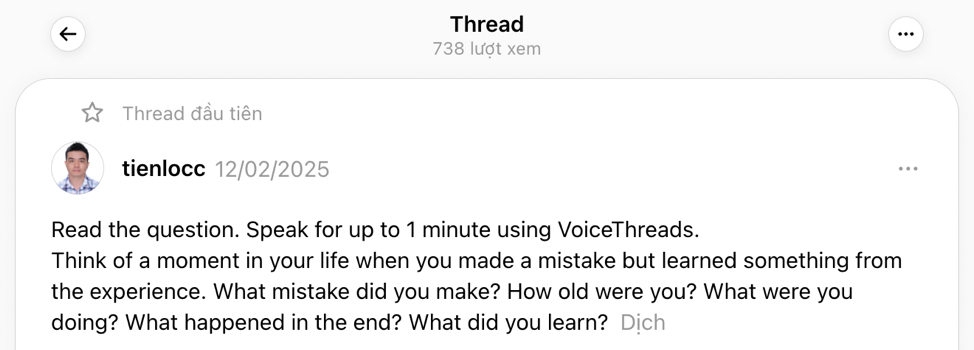
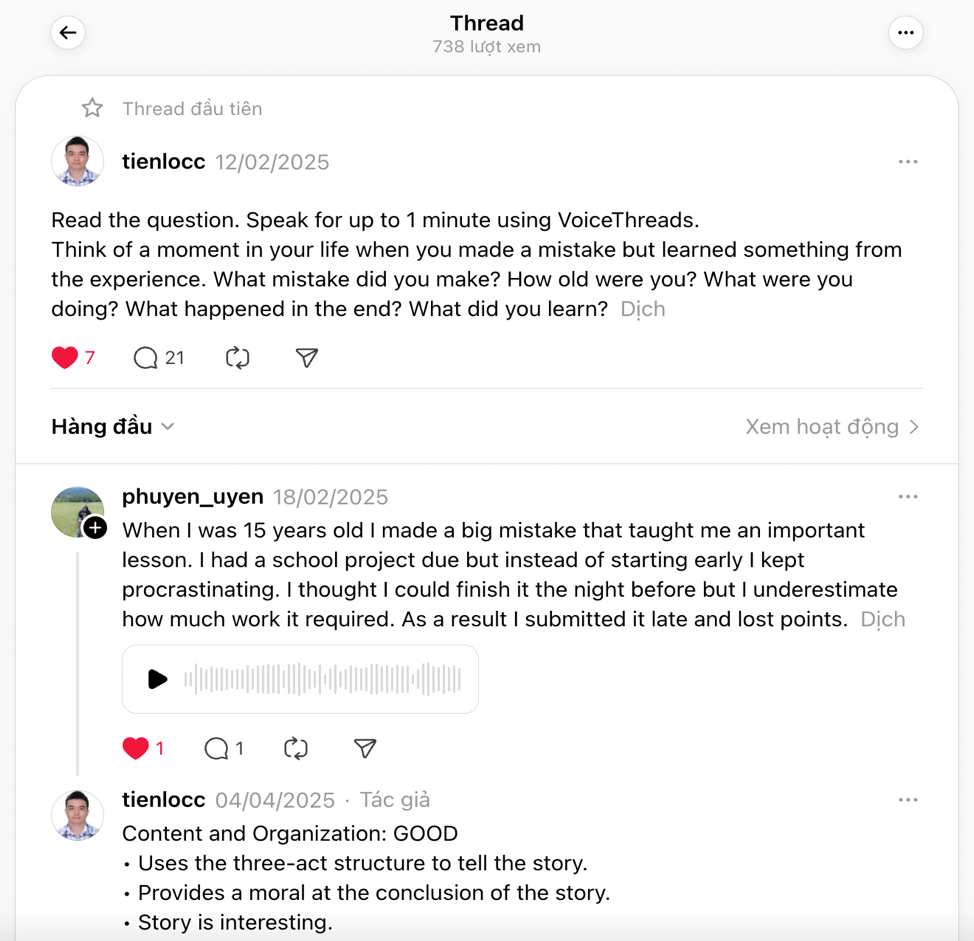
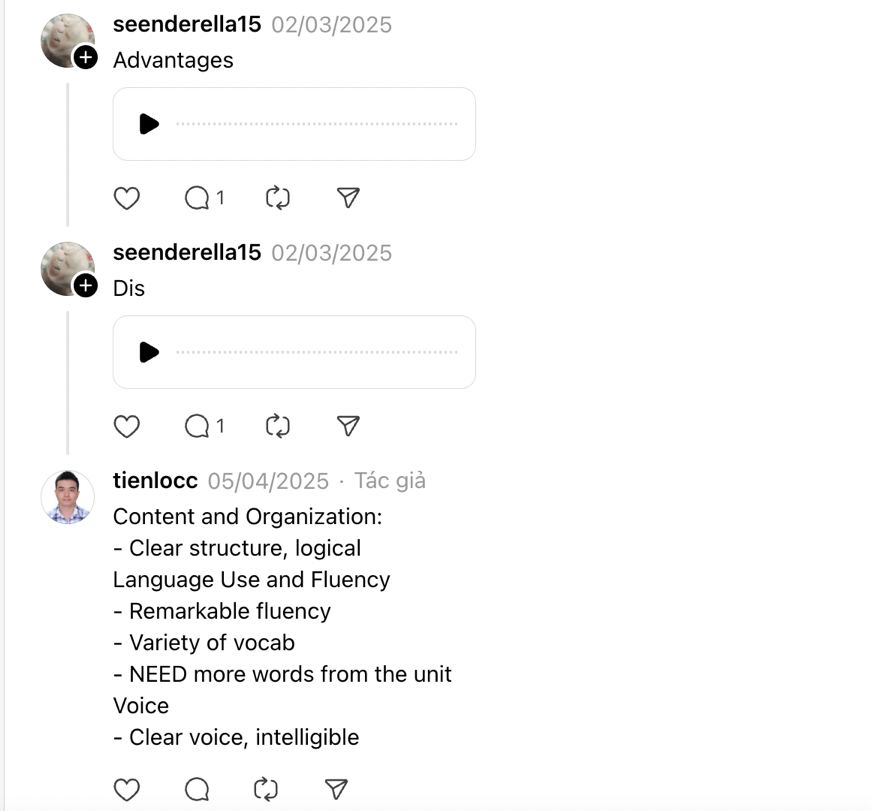
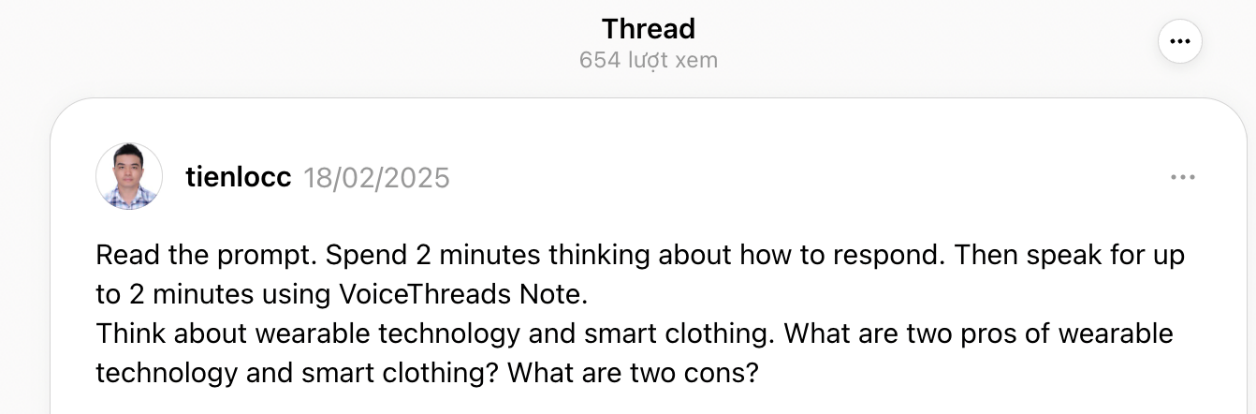
To promote self-directed speaking learning, students completed structured asynchronous speaking tasks using Instagram Threads Voice Notes each week outside of class. This integration aimed to encourage independent practice, goal-setting, and reflection as part of their oral language development. Additionally, throughout the nine-week intervention, students completed weekly learner logs after each Threads Voice Notes task. Figures 1 and 2 are examples of these tasks. These brief reflections were not intended as a formal research instrument. The primary purpose of the logs was pedagogical: to encourage learners to pause, reflect on their speaking practice, and plan subsequent improvement, thereby supporting autonomy and self-regulation during the intervention. The log entries were highly variable in length, focus, and completeness across participants and weeks, and many consisted of short bullet-point responses rather than extended reflections. As a result, the logs did not lend themselves to systematic qualitative coding or longitudinal analysis. To preserve methodological rigour and analytic coherence, the learner logs were therefore excluded from formal analysis and treated as a learning support tool rather than an empirical data source. This decision necessarily limits the depth of developmental insight available and is acknowledged as a limitation of the study.
Data Collection and Analysis
The questionnaire data were collected online using Google Forms and exported to Microsoft Excel for cleaning and coding. Descriptive statistics, including means and standard deviations, were calculated for each item pre- and post-intervention to determine the differences. The questionnaire, administered before and after the intervention, measured students’ self-directed English-speaking learning behaviours across four domains: goal setting, strategic planning, self-monitoring, and independent speaking practice. All items were rated on a 5-point Likert scale (1 = Strongly Disagree to 5 = Strongly Agree). The questionnaire was adapted from established instruments on learner autonomy and self-directed learning (Benson, 2011; Little, 2007), with items reworded to reflect the specific context of out-of-class English-speaking practice using digital voice tools. Content validity was enhanced through expert review by two EFL lecturers with experience in CALL and speaking instruction, who evaluated item clarity, relevance, and alignment with the four SDL domains. Minor wording revisions were made based on their feedback.
Prior to the main study, the questionnaire was piloted with a small group of comparable EFL students to ensure comprehensibility and appropriate response variation. Reliability of the instrument was examined using Cronbach’s alpha. In the main study, internal consistency estimates ranged from .28 to .51 at pre-test and from .55 to .67 at post-test across the four subscales, reflecting greater coherence in students’ self-reported behaviours following the intervention. The very low reliability coefficient observed at pre-test (α = .28) represents a serious limitation of the study, indicating substantial measurement instability at the initial stage. This issue is likely attributable to participants’ limited prior experience with self-directed speaking practices and will be considered explicitly in the interpretation of findings, discussion, and conclusions. Similar patterns have been reported in exploratory studies measuring emerging learner constructs. Given the exploratory nature of the adapted instrument and the small number of items per subscale, these values were considered acceptable for the purposes of the study. Descriptive statistics (means and standard deviations) were calculated for each item and subscale at pre- and post-intervention. To examine changes over time, paired-samples t-tests were conducted for each subscale, with effect sizes (Cohen’s d for paired samples) reported to indicate the magnitude of change.
For the qualitative component, students were invited to participate in individual Zoom interviews. Interviews were audio-recorded with participants’ consent to ensure ethical compliance and data accuracy. The interview data were analysed using thematic analysis following the procedures outlined by Braun and Clarke (2006). Analysis involved several stages: (1) familiarisation with the data through repeated reading of transcripts; (2) initial coding using a hybrid deductive–inductive approach, with deductive codes informed by Self-Determination Theory (autonomy, competence, relatedness) and inductive codes emerging from the data; (3) grouping codes into broader themes; and (4) reviewing and refining themes to ensure internal coherence and clear distinctions between themes. To enhance trustworthiness, an audit trail was maintained documenting coding decisions and theme development. Representative excerpts were selected to illustrate each theme and ensure transparency in interpretation.
Additionally, throughout the nine-week intervention as shown in Table 1, students completed weekly learner logs after each Threads Voice Notes task. These logs prompted students to record their task completion, time spent, weekly speaking goals, strategies used, and reflections on their progress. The logs (e. g., Figure 3) were designed to support students’ self-reflection and promote sustained self-directed learning but were not collected for formal analysis.
Table 1. Weekly Instruction, Threads Voice Note tasks, and Data Collection Timeline
|
Week |
Unit |
In-class activities & Speaking tasks |
Threads Voice Notes task |
Data collection |
|---|---|---|---|---|
|
Pre- |
Pre-questionnaire |
|||
|
1-2 |
Unit 1: The Art of Storytelling |
- Group discussion: Share personal stories with peers |
Record a 1-minute story answering: “Think of a time you made a mistake but learned something from it.” |
Summative assessment (Week 2): Presentation using Unit 1 rubric |
|
3-4 |
Unit 2: The High Price of Fashion |
- Small group debate: Pros and cons of fast fashion |
Record a 1-minute response: “What are two pros and two cons of wearable technology and smart clothing?” |
Summative assessment (Week 4): Presentation using Unit 2 rubric |
|
5-6 |
Unit 3: The History of Hygiene |
- Pair activity: Compare past vs. modern hygiene ads |
View an ad and record a response describing it and its impact. |
Summative assessment (Week 6): Presentation using Unit 3 rubric |
|
7-8 |
Unit 4: Lessons in Leadership |
- Group discussion: Leadership in the animal world |
Choose one leadership problem and give a 2-minute solution with justifications. |
Summative assessment (Week 8): Presentation using Unit 4 rubric |
|
9 |
Post-intervention questionnaire |
Instructions: Complete this log after each week’s Threads Voice Notes task to reflect on your speaking practice.
Figure 3. Speaking Practice Log
|
Section |
Prompt |
Your answer |
|---|---|---|
|
Week |
Which week is this log for? (e.g. Week 1, Week 2, …) |
|
|
Task completion |
Did you complete this week’s Threads Voice Notes task? |
|
|
Time spent |
Approximately how many minutes did you spend recording, editing, and re-recording your voice note this week? |
|
|
Weekly goal |
What was your goal for this speaking task? (e.g. improve fluency, pronunciation, vocabulary, confidence) |
|
|
Self-evaluation |
How satisfied are you with your recording this week? (1 = Not satisfied at all, 5 = Very satisfied) |
|
|
Next goal |
What is your speaking focus for next week’s task? |
RESULTS
Quantitative results: Self-directed English-speaking learning
Table 2. Changes in Self-Directed English-Speaking Learning across Four Domains (N = 59)
|
Self-directed learning domain |
Pre-test M |
Post-test M |
Mean difference |
t(58) |
p |
Cohen’s d |
|---|---|---|---|---|---|---|
|
Goal setting |
3.38 |
3.91 |
0.53 |
7.68 |
< .001 |
1.00 |
|
Strategic planning |
3.48 |
3.95 |
0.47 |
7.36 |
< .001 |
0.96 |
|
Self-monitoring |
3.48 |
3.97 |
0.49 |
8.26 |
< .001 |
1.07 |
|
Independent speaking practice |
3.34 |
4.06 |
0.72 |
9.61 |
< .001 |
1.25 |
Note: Pre- and post-test scores represent mean values based on a 5-point Likert scale (1 = Strongly disagree, 5 = Strongly agree). Mean differences were calculated as post-test minus pre-test scores. Cohen’s d represents paired-samples effect sizes.
Table 2 summarises changes in students’ self-directed English-speaking learning across four domains following the intervention. Paired-samples t-tests were conducted to examine pre–post differences, and effect sizes were calculated to estimate the magnitude of change. Overall, the results indicate consistent increases across all four domains, with moderate to large effect sizes.
Improvements were observed in goal setting, where mean scores increased from 3.38 at pre-test to 3.91 at post-test, reflecting a mean gain of 0.53 (t(58) = 7.68, d = 1.00). Strategic planning showed a similar pattern, increasing from 3.48 to 3.95 (mean difference = 0.47, t(58) = 7.36, d = 0.96). Scores for self-monitoring also increased, from 3.48 to 3.97 (mean difference = 0.49, t(58) = 8.26, d = 1.07), suggesting greater engagement in reflective speaking practices such as reviewing recordings and evaluating performance. The largest increase was observed for independent speaking practice, which rose from 3.34 to 4.06 (mean difference = 0.72, t(58) = 9.61, d = 1.25), indicating increased willingness to practise speaking outside the classroom.
Taken together, these patterns suggest that participation in weekly asynchronous Threads Voice Notes activities was associated with measurable improvements in students’ self-reported self-directed speaking behaviours. However, given the one-group pre–post design, these results should be interpreted cautiously, as the observed changes may also reflect other factors such as increased familiarity with course expectations or natural development over time.
Qualitative results
Three themes emerged from the interview data as presented in Table 3. The first theme, increased autonomy in speaking practice, reflects students’ perceptions that Threads Voice Notes allowed them to control the timing, content, and process of their speaking practice. The ability to rehearse and re-record voice notes encouraged learners to take greater responsibility for managing their own speaking development outside class. The second theme, integration of social media use and speaking practice, captures how students experienced Threads as a familiar platform through which English-speaking practice could be incorporated into their everyday social media routines. This reduced the perception of speaking as a formal academic task and supported more sustained engagement. The third theme, reduced pressure and increased willingness to practise, describes students’ experiences of lower anxiety when recording voice notes compared to face-to-face speaking tasks. The asynchronous and private nature of Threads Voice Notes encouraged more frequent practice without fear of immediate evaluation. In summary, these themes suggest that Threads Voice Notes supported self-directed English-speaking learning by promoting learner autonomy, embedding practice within daily digital habits, and lowering affective barriers to speaking.
Table 3. Qualitative Themes and Participant Frequencies from Student Interviews (N = 10)
|
Theme |
Description |
Illustrative student quotes |
Frequency (n) |
|---|---|---|---|
|
Increased autonomy in speaking practice |
Students described having greater control over when, how, and what they practised, leading to a stronger sense of responsibility for their own speaking development. |
“I could choose my own topic and record when I felt ready, not when the teacher asked.” “I felt more responsible because no one forced me to practise.” |
8 |
|
Integration of social media use and speaking practice |
Students reported that Threads allowed them to practise English speaking while using a familiar social media platform, making practice feel more natural and easier to sustain as part of daily routines. |
“I already used Threads every day, so recording voice notes in English felt natural, not like homework.” “I could practise speaking and use social media at the same time, so I didn’t feel bored.” |
9 |
|
Reduced pressure and increased willingness to practise |
The asynchronous and private nature of voice notes reduced anxiety and encouraged more frequent speaking practice outside class. |
“Recording voice notes felt safer than speaking in front of the class.” “I practised more because there was less stress and I could redo it.” |
7 |
DISCUSSION
The present findings suggest that integrating weekly asynchronous Threads Voice Notes into a first-year listening–speaking course was associated with increases in students’ self-reported self-directed speaking behaviours, particularly in independent practice and self-monitoring. Interpreted through Self-Determination Theory (Deci & Ryan, 2000), these patterns can be partly explained by how the design of the intervention supported learners’ psychological needs. In addition to task structure, the familiarity of Threads as a social-media platform appeared to play an important role in shaping students’ engagement with speaking practice.
First, the use of Threads Voice Notes supported autonomy by allowing learners to practise speaking at their own pace, choose when to record, and revise their responses before sharing. Importantly, because Threads was already embedded in students’ everyday digital routines, these autonomous choices did not require learning a new platform or adapting to unfamiliar technological conventions. This familiarity appeared to lower the entry barrier to participation and encouraged learners to integrate speaking practice more naturally into their daily lives rather than viewing it as a separate academic obligation.
Second, the intervention appeared to support competence through repeated cycles of recording and self-listening, which enabled learners to notice errors, track progress, and experience gradual improvement. The informal and familiar social-media environment may have further strengthened perceived competence by reducing performance pressure and allowing learners to experiment with spoken English without fear of immediate judgment. As students became more comfortable using voice notes in a familiar context, they reported increased confidence in managing their own speaking development.
In contrast, support for relatedness was less pronounced. Although Threads is inherently a social platform, opportunities for meaningful peer interaction were limited in this study, as speaking tasks primarily emphasized individual practice. Some students valued the possibility of sharing voice notes with peers, but the absence of structured peer feedback or collaborative speaking tasks may have constrained the development of sustained social connection through the platform. This is in line with the suggestion that facilitation is required for online communication (Dang & Robertson, 2010).
These interpretations should be read in light of the study’s methodological constraints. The one-group pre–post design and reliance on self-report measures mean that observed increases can be associated with the intervention but cannot be attributed to it definitively. Alternative explanations, including maturation, concurrent classroom instruction, and novelty effects or Hawthorne effects, may partially account for the gains. Moreover, although effect sizes for the subscales were large, questionnaire responses capture perceived behaviours and attitudes rather than objectively measured speaking skill. The relatively modest internal consistencies at pre-test further indicate that the adapted subscales would benefit from additional psychometric validation.
Given these caveats, the study points to several practical and research implications. Pedagogically, instructors who adopt voice-note tasks should design activities that explicitly scaffold autonomy (clear choice options, goal prompts) and competence (micro-targets, guided self-assessment). To better address relatedness, tasks might include optional small-group exchanges, scaffolded peer comments, or instructor audio feedback to create a psychologically safe social space. For future research, stronger causal inference would be achieved with randomized or matched-control designs, objective assessments of speaking performance (rater scores, pronunciation measures), and formalised use of learner logs as longitudinal data. Triangulating questionnaire results with classroom observations, coded learner logs, and instructor assessments would provide a more comprehensive picture of how digital voice tools affect both self-regulated behaviours and actual communicative competence.
In summary, Threads Voice Notes show promise as a low-stakes affordance that can foster autonomy and competence in out-of-class speaking practice; however, stronger experimental designs and objective outcome measures are needed to confirm and extend these preliminary findings.
CONCLUSION
This study examined the use of Instagram Threads Voice Notes to support self-directed English-speaking learning among first-year EFL students at Saigon University. The pre–post questionnaire results indicate increases in students’ reported goal setting, planning, self-monitoring, and independent speaking practice over the intervention period. From a Self-Determination Theory perspective, the findings suggest that asynchronous voice-note tasks may support learners’ autonomy and perceived competence by allowing flexible, low-pressure opportunities for practice beyond the classroom.
However, these findings should be interpreted cautiously. The study involved a relatively small and context-specific sample drawn from a single university program, which limits the generalisability of the results to other educational settings. The absence of a control group and the reliance on self-reported measures restrict the ability to make causal claims about the effects of Threads Voice Notes. In addition, the short duration of the intervention and the lack of objective measures of speaking performance mean that the results primarily reflect changes in learners’ perceptions rather than verified gains in speaking proficiency.
Future research could address these limitations by employing experimental or quasi-experimental designs with more diverse participant groups and longer intervention periods. Incorporating performance-based speaking assessments, classroom observations, or learning analytics would provide stronger evidence of learning outcomes. Further studies may also explore how social-media-based voice tools can be combined with structured peer interaction, instructor feedback, or AI-supported analysis to better support relatedness alongside autonomy and competence.
In conclusion, while the present findings do not allow strong causal inferences, they indicate that Instagram Threads Voice Notes have potential as an accessible and learner-centred tool for encouraging self-directed English-speaking practice. When carefully integrated into course design, such platforms may help extend speaking opportunities beyond the classroom, particularly in contexts where authentic oral practice is limited.
ACKNOWLEDGEMENTS
This research project received no external funding. I would like to express my sincere gratitude to everyone who supported me throughout this study, especially my colleagues and students at Saigon University, whose encouragement and participation made this work possible.
References
Barrot, J. S. (2018). Facebook as a learning environment in language teaching and learning: A critical analysis of the literature from 2010 to 2017. Journal of Computer Assisted Learning, 34(6), 863–875. https://doi.org/10.1111/jcal.12295.
Barrot, J. S. (2020). Scientific mapping of social media in education: A decade of exponential growth. Journal of Educational Computing Research, 58(4), 645–668. https://doi.org/10.1177/0735633120972010.
Benson, P. (2011). Teaching and researching autonomy in language learning (2nd ed.). Routledge.
Blake, R. J. (2013). Brave new digital classroom: Technology and foreign language learning (2nd ed.). Georgetown University Press.
Blattner, G., & Fiori, M. (2011). Virtual social network communities: An investigation of language learners’ development of sociopragmatic awareness and multiliteracy skills. CALICO Journal, 29(1), 24–43. https://doi.org/10.11139/cj.29.1.24-43.
Bugeja, M. J. (2006). Facing the Facebook. The Chronicle of Higher Education, 52(21), C1. https://eric.ed.gov/?id=EJ756266.
Bygrave, J. (2022). Reflect listening & speaking 5 with the Spark platform (1st ed.). National Geographic Learning.
Chugh, R., & Ruhi, U. (2018). Social media in higher education: A literature review of Facebook. Education and Information Technologies, 23(2), 605–616. https://doi.org/10.1007/s10639-017-9621-2.
Dang, T. T. (2025). Developing a model for learner autonomy capacity measurement in EFL learning. rEFLections, 32(2), 1099-1119. https://doi.org/10.61508/refl.v32i2.283186.
Dang, T. T., & Robertson, M. (2010). Responses to learning management system: A case study in higher education in Vietnam. Paper presented at the ACEC2010: Digital Diversity Conference, Melbourne, Australia.
Erdmann, C. (2024). The hidden risks of mobile calls and messages: Why end-to-end encryption is just the starting line. CSO Online. https://www.csoonline.com/article/3624850/the-hidden-risks-of-mobile-calls-and-messages-why-end-to-end-encryption-is-just-the-starting-line.html.
Eshach, H. (2007). Bridging in-school and out-of-school learning: Formal, nonformal, and informal education. Journal of Science Education and Technology, 16(2), 171–190. https://doi.org/10.1007/s10956-006-9027-1.
Forbes Technology Council. (2020). The rising concern around consumer data and privacy. Forbes. https://www.forbes.com/councils/forbestechcouncil/2020/12/14/the-rising-concern-around-consumer-data-and-privacy.
Godwin-Jones, R. (2018). Using mobile technology to develop language skills and cultural understanding. Language Learning & Technology, 22(3), 3–17.
Greenhow, C., & Lewin, C. (2016). Social media and education: Reconceptualizing the boundaries of formal and informal learning. Learning, Media and Technology, 41(1), 6–30. https://doi.org/10.1080/17439884.2015.1064954.
Hafner, C. A. (2014). Embedding digital literacies in English language teaching: Students’ digital video projects as multimodal ensembles. TESOL Quarterly, 48(4), 655–685. https://doi.org/10.1002/tesq.138.
Hall, P. (2023). How to avoid using up all of your smartphone data. WIRED. https://www.wired.com/story/how-to-stop-using-all-your-mobile-data.
Hutchinson, A. (2023). Threads rolls out post editing and voice notes. Social Media Today. https://www.socialmediatoday.com/news/threads-post-editing-voice-notes/696467.
Kabilan, M. K., Ahmad, N., & Abidin, M. J. Z. (2010). Facebook: An online environment for learning of English in institutions of higher education? The Internet and Higher Education, 13(4), 179–187. https://doi.org/10.1016/j.iheduc.2010.07.003.
Kukulska-Hulme, A. (2020). Mobile-assisted language learning. Language Teaching, 53(2), 157–182. https://doi.org/10.1017/S0261444819000465.
Lai, C., & Zheng, D. (2018). Self-directed use of mobile devices for language learning beyond the classroom. ReCALL, 30(3), 299–318. https://doi.org/10.1017/S0958344017000258.
Lee, L. (2016). Autonomous learning through task-based instruction in fully online language courses. Language Learning & Technology, 20(2), 81–97. https://doi.org/10.64152/10125/44462.
Little, D. (2007). Self-access, self-directed learning, and strategy use in language learning settings. System, 35(4), 561–571. https://doi.org/10.1016/j.system.2007.07.003.
Mills, N. A. (2011). Situated learning through social networking communities: The development of joint enterprise, mutual engagement, and a shared repertoire. CALICO Journal, 28(2), 345–368. https://doi.org/10.11139/cj.28.2.345-368.
Nguyen, T. D. (2024). Exploring the impact of mobile-assisted language learning on the autonomous English learning of EFL sophomores: A case study. Proceedings of the AsiaCALL International Conference, 6, 217–237. https://doi.org/10.54855/paic.24616.
Roy, S. S., & Gandhimathi, S. N. S. (2024). Self-directed learning for optimizing sustainable language learning via mobile-assisted language learning: A systematic review. Frontiers in Education, 9, Article 1463721. https://doi.org/10.3389/feduc.2024.1463721.
Sykes, J. M., Oskoz, A., & Thorne, S. L. (2008). Web 2.0, synthetic immersive environments, and mobile resources for language education. CALICO Journal, 25(3), 528–546. https://doi.org/10.11139/cj.25.3.528-546.
Thorne, S. L., & Reinhardt, J. (2008). Bridging activities, new media literacies, and advanced foreign language proficiency. CALICO Journal, 25(3), 558–572. https://doi.org/10.11139/cj.25.3.558-572.
Tran, T. B. T., & Vuong, T. K. (2024). Mobile devices and autonomy in English language learning: A deeper look at Van Lang University. International Journal of TESOL & Education, 4(3), 144–160. https://doi.org/10.54855/ijte.24439.
Wang, S., & Vásquez, C. (2012). Web 2.0 and second language learning: What does the research tell us? CALICO Journal, 29(3), 412–430. https://doi.org/10.11139/cj.29.3.412-430.
Wu, X., & Li, R. (2024). Unraveling effects of AI chatbots on EFL learners’ language skill development: A meta-analysis. The Asia-Pacific Education Researcher. https://doi.org/10.1007/s40299-024-00780-1.
Ziegler, N. (2016). Synchronous computer-mediated communication and interaction: A meta-analysis. Studies in Second Language Acquisition, 38(3), 553–586. https://doi.org/10.1017/S027226311500042X.

Downloads
Published
Issue
Section
License
Copyright (c) 2026 Tien Loc Do

This work is licensed under a Creative Commons Attribution-NonCommercial-NoDerivatives 4.0 International License.