
Using YouTube to practice listening beyond the classroom: A study of students’ perceptions
DOI:
https://doi.org/10.65956/ltlt.2026.12Keywords:
listening, student's perceptions, TAM, use of YouTubeAbstract
Listening plays a fundamental role in teaching and learning a foreign language, and promoting extensive listening beyond the classroom becomes increasingly important in fostering listening competence and learner autonomy. Among the available online resources, YouTube is reported to provide rich and authentic input for learners; however, evidence on learners’ reactions towards using YouTube for out-of-class listening practice remains limited, particularly in higher education in EFL contexts. This study aims to examine students' perceptions of using YouTube to practice their listening skills outside the classroom. Data were collected from 114 learners enrolled in note-taking Listening courses (B2-C1 levels) at a university in Ho Chi Minh City over ten weeks. Adopting a sequential explanatory mixed-methods design, the study integrated questionnaire data with follow-up interviews. Data analysis was guided by the adapted TAM model from Davis (1989) and Maziriri et al. (2020). Quantitative findings indicated overall positive perceptions towards using YouTube as a supplementary listening resource beyond class time. Qualitative results further revealed that students valued YouTube’s accessibility, user-friendly features, and exposure to diverse authentic content, which supported comprehension and motivation for autonomous practices. By applying TAM to out-of-class listening practice rather than classroom instruction, this study extends existing TAM-based research and highlights practical considerations for integrating YouTube into extensive listening activities. This paper provides a foundation for further experimental research exploring the impact of YouTube-supported listening on measurable learning outcomes.
INTRODUCTION
English plays a crucial role in global communication and is widely regarded as the international common tongue (Putra, 2020). As a result, the demand for effective English Language Teaching (ELT) has increased, particularly in contexts where English is taught as a foreign language. In this era of globalization and digital transformation, this demand has been increasingly supported by digital platforms and online resources, allowing access to authentic language use and learning beyond classroom boundaries. As a result, the efficient integration of technology into English language teaching and learning has become a rising educational concern.
Traditionally, English competency has been conceptualized through four core skills: listening, reading, speaking, and writing (Selinker & Tomlin, 1986). Among these, listening is widely acknowledged as the first and most fundamental skill in second language acquisition, as it provides essential linguistic input for language development (Gilakjani & Sabouri, 2016). Despite its foundational role, listening instruction has often been marginalized in ELT, as instructional time is frequently allocated to grammar, vocabulary, and reading comprehension (Vandergrift, 2007). This imbalance is particularly more severe in exam-oriented contexts where assessment systems prioritize receptive written skills, highlighting a persistent challenge in ELT.
This challenge is especially evident in Vietnam’s education system. In many public high schools, listening components are commonly neglected or even excluded from English instruction (Duong et al., 2019; Thai & Nguyen, 2018). This situation largely stems from the washback effect of an exam-driven curriculum that emphasizes grammar, vocabulary, and reading comprehension (Bui & Duong, 2018; Tran & Duong, 2020). Consequently, students have limited opportunities to develop their listening skills during their upper secondary education (Tran & Duong, 2020). When these learners enter university, their listening proficiency often lags behind other language skills (Tran et al., 2021), leading to difficulties during listening, such as boredom, lack of concentration and confidence, and problems understanding long and fast materials (Nguyen et al., 2020; Phan et al., 2021).
In response to these challenges, scholars emphasize the importance of providing learners with frequent and meaningful listening practice opportunities, particularly beyond classroom settings where learners can take greater control of their learning (Gonulal, 2020). Moreover, exposure to authentic listening resources outside classrooms enables learners to engage with real-world language use, adapt to natural speech rates, and improve contextual comprehension. Additionally, such informal listening experiences can enhance learners' motivation by reducing the pressure associated with formal assessment (Vandergrift, 2007).
Historically, audio CDs were the primary resource for out-of-class listening practice. However, this method was often scripted and designed for pedagogical modeling, making them less representative of real-life spoken English (Thorn, 2009). With advancements in digital technology, internet-based platforms have emerged as alternative listening resources (Gonulal, 2020). Among these, YouTube has gained prominence due to its vast range of topics, free accessibility, and personalized recommendation system that aligns with learners’ interests and needs (Wilson, 2015; Ayu, 2016; Wattenhofer et al., 2012).
While numerous studies have investigated the effectiveness of YouTube in classroom-based listening instruction and reported positive learning outcomes (Qomariyah, 2021; Rahman et al., 2022) and student attitudes (Shafwati et al., 2021), research on students’ perceptions of using YouTube for listening practice beyond classrooms remains limited (Dzaky, 2022; Medoukali, 2015; Meldayana et al., 2025). However, in the Vietnamese context, although online resources have been acknowledged as beneficial for post-class listening practice (Nguyen et al., 2021; Vo, 2013), the specific role of YouTube in developing listening skills has not been sufficiently examined, particularly at the university level (Do, 2019).
Therefore, this study targets Vietnamese university EFL students, as well as English language educators and curriculum designers, who seek practical insights into technology-enhanced listening practice beyond classroom instruction. Specifically, the study aims to examine English-majored students’ perceptions of YouTube as a tool for practicing listening skills beyond class hours in the Vietnamese higher education context, with a focus on a university in Ho Chi Minh City. The findings aim to inform future experimental research and offer implications for integrating digital platforms into ELT to promote learner autonomy and listening development. To obtain the objectives mentioned, this research addresses the following question:
What are students’ perceptions of the application of YouTube to practice their listening skills beyond the classroom?
LITERATURE REVIEW
Challenges in Practicing Listening Skills in the Vietnamese Context
In Vietnam, English instruction is strongly shaped by an exam-driven education system that prioritizes grammar, vocabulary, and reading comprehension over listening skills from elementary to high school education (Ngo, 2019; Pham & Bui, 2019). As a result, learners receive limited exposure to authentic listening input both inside and outside the classroom (Vu & Shah, 2016). This instructional imbalance often leads students to enrol in university with underdeveloped listening proficiency, which poses challenges to their academic learning in higher education (Nguyen et al., 2020).
Empirical studies have identified several linguistic barriers affecting Vietnamese undergraduates’ listening comprehension. According to Nguyen et al. (2021), students struggle with limited lexical knowledge and difficulty segmenting connected speech. Similarly, Phan et al. (2021) and Tran et al. (2024) reported that unfamiliar topics and accents further impede comprehension, particularly in fast-paced materials. Pham and Le (2025) additionally noted that learners’ limited exposure to varied listening genres restricts their ability to infer meaning from context. These findings collectively suggest that linguistic challenges are closely linked to insufficient exposure to diverse and authentic listening input.
In addition to linguistic barriers, affective factors also play a significant role in listening comprehension. Nguyen et al. (2020) found that distraction and anxiety frequently occur during extended listening tasks, while Tran et al. (2024) identified boredom as a key contributor to disengagement. These findings align with Yagang’s (1994) assertion that negative emotional states diminish listening capacity. Meanwhile, Lam (2024), Le et al. (2022), and Tran et al. (2024) note that restricted access to authentic materials is a factor exacerbating both linguistic and affective challenges. Taken together, this body of research highlights the need for accessible, engaging, and autonomous approaches to listening practice that extend beyond classroom instruction in the Vietnamese EFL context.
YouTube as a Resource for EFL Listening Practice
YouTube is a widely used online platform that provides access to a vast range of authentic audiovisual materials reflecting real-world language use (Snickars & Vonderau, 2009). In EFL contexts, YouTube has been recognized as a valuable resource for listening development, as it exposes learners to diverse accents, speech rates, and discourse types that are often absent from traditional instructional materials (Silviyanti, 2014). Moreover, YouTube supports self-directed learning beyond the classroom through its accessible design (Almurashi, 2016; Putri et al., 2020) and learner-controlled features, such as playback controls or captioning tools (Neubauer, 2021; Zong et al., 2024).
Classroom-based studies have demonstrated the pedagogical benefits of integrating YouTube into listening instruction. Empirical findings (e.g., Ekawati, 2022; Qomariyah, 2021; Rahman et al., 2022; Sembiring & Katemba, 2023) found that students using YouTube-based listening materials achieved higher comprehension scores than those using audio-only resources. Beyond cognitive outcomes, Shafwati et al. (2021) reported increased learner confidence and enjoyment through the integration of YouTube videos into listening lessons, while Yuyun and Simamora (2021) observed enhanced motivation due to the platform’s multimodal features.
Despite substantial evidence supporting classroom-based applications, studies examining YouTube use for listening practice beyond the classroom remain limited. Wahidah and Luthfiyyah (2018) explored university students’ after-class use of YouTube for listening but focused primarily on time allocation across listening material types rather than on learning strategies or effectiveness. In the Vietnamese context, Le and Pham (2020) found that out-of-class listening activities increased students’ exposure to English input; however, YouTube was not examined as a targeted resource, as learners were free to choose their own materials.
Surprisingly, considerable effort has been devoted to perception-based studies, which reveal that learners value YouTube for autonomous listening practice. Medoukali (2015) found that English-major students preferred YouTube for out-of-class listening practice due to its up-to-date and reliable content that supplemented their language knowledge alongside classroom instruction. Dzaky (2022) reported that students favored YouTube for extensive listening, as its visual cues and replay options supported their comprehension. Purwanti et al. (2022) further demonstrated that YouTube fosters learner autonomy at various levels by allowing learners to regulate content selection and listening duration. Meldayana et al. (2025) confirmed that students perceived YouTube as a reliable listening resource with diverse and appropriate content for self-directed learning. Sila and Gunawan (2025) expanded on the findings by incorporating lecturers’ voices, viewing the platform as adaptable to diverse learning needs.
Despite these encouraging findings, research focusing specifically on Vietnamese students’ perceptions of using YouTube for out-of-class listening practice remains scarce. One of the few attempts comes from Do (2019), which examines university students’ perceptions of English listening practices outside of class time. The results showed that YouTube emerged as one of the most preferred open tools or sources among students. However, the study provided limited analysis of YouTube-specific affordances and learners’ perceptions. This gap indicates a need for further investigation into how Vietnamese university EFL students perceive YouTube as a tool for listening practice beyond classrooms.
Technology Acceptance Model
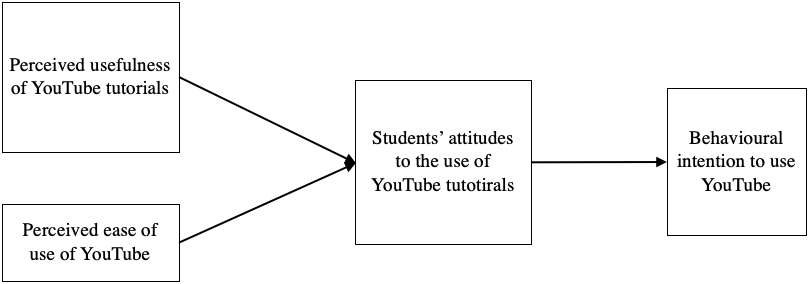
Over the past decades, numerous theoretical models have been developed to investigate individuals’ perceptions of the use of new technologies. Among these models, the Technology Acceptance Model (TAM), proposed by Davis in 1989, has become one of the most influential frameworks for understanding users’ acceptance of technology (Zhou et al., 2019). Building on this model, Maziriri et al. (2020) adapted it for their study on students' perceptions of using YouTube as a learning tool (See Figure 1). The results show that Perceived Usefulness (PU) and Perceived Ease of Use (PEOU) directly affect students’ Attitudes towards Use of YouTube tutorials, thereby shaping their Behavioral Intention to Use YouTube in the future.
While Maziriri’s TAM includes Attitude toward Use as a mediating factor between Perceived Ease of Use, Perceived Usefulness, and Behavioral Intention, Davis et al. (1989) found that Attitude toward Use has little impact on mediating these relationships. Therefore, this study adapted Maziriri et al.'s (2020) framework, excluding the Attitude toward Use factor to create a simpler, more context-appropriate model (see Figure 2).
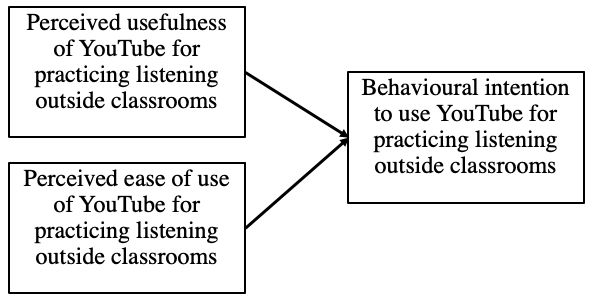
This paper adopts Davis et al.’s (1989) definitions of PEOU and PU, which in turn are (1) the extent to which a learner believes that employing a particular system will be effortless and (2) the degree to which one thinks that utilizing the system will improve his/her listening comprehension performance (cf. Granić & Marangunić, 2019; Zaineldeen et al., 2020). Meanwhile, BITU refers to a person’s plans to behave in a certain way with regard to a particular system (Zaineldeen et al., 2020).
METHODOLOGY
Study Design
To answer the research question, a sequential explanatory mixed-methods approach was applied, in which quantitative data collection and analysis were followed by qualitative inquiry to explain and elaborate on the initial findings (Johnson et al., 2007). The quantitative phase involved a questionnaire administered to English-majored university students to capture overall patterns in their perceptions of using YouTube for out-of-class listening practice and to allow for a degree of generalizability (Dawson, 2009). Subsequently, qualitative structured interviews were conducted to gain deeper insights into students’ responses, clarify questionnaire results, and explore underlying reasons for their perceptions (Gill et al., 2008). This design was chosen as it combines breadth of understanding from survey data with depth and contextual richness from interview data. It is thus appropriate for the research focus on learner perceptions.
Sample and Sampling
To conduct this research, 114 English majors enrolled in academic note-taking listening classes (B2-C1 level in the CEFR) were selected as research participants. These students were chosen because they possessed comparable levels of English proficiency, having completed the Intensive English courses with results equivalent to at least an IELTS score of 5.5. This ensured that the participants had an appropriate level of English proficiency to access the diverse materials available on the YouTube platform and experienced relatively few vocabulary difficulties. The learning outcomes of this course emphasized academic listening comprehension and note-taking skills, requiring students to comprehend the key ideas with relevant details in the listening text without relying on specific listening strategies or techniques. In the final test, students were required to listen to part of a lecture twice, take notes, and use those notes to answer comprehension questions, including the lecture's topic and key details, or to fill in summary notes. Consequently, they needed to practice listening not only in class but also outside the classroom to achieve the learning outcomes of the course. In addition, this research narrowed the scope to English majors, believing that they would be more motivated to engage with English more frequently than students in other disciplines. Seven students accepted the invitation for follow-up interviews embedded as the last item in the survey. For confidentiality purposes, participants’ identities were anonymized by assigning interview codes (I1, I2, I3, etc.) in all transcripts and reports.
Data Collection Instruments
The Questionnaire
The questionnaire employed closed-ended items measured on a 5-point Likert scale, a widely used psychometric scale for capturing perceptions and attitudes (Nemoto & Beglar, 2014). It was developed based on an adapted Technology Acceptance Model (TAM) (Davis, 1989), following the revised framework proposed by Maziriri et al. (2020), with the Attitude toward Use factor excluded. Google Forms was selected for the survey due to its accessibility and automatic linking with Google Sheets, which is particularly helpful for evaluation and analysis (Serrano et al., 2019).
The instrument consisted of five sections. After the informed consent section, three sections measured Perceived Ease of Use (PEOU), Perceived Usefulness (PU), and Behavioral Intention to Use (BITU), comprising a total of nine items. Most survey items were adapted from TAM-based studies on YouTube use in language learning (Chintalapati & Daruri, 2017; Harlinda, 2019). For example, PEOU items examined ease of accessing and controlling YouTube videos, PU items focused on perceived benefits for listening comprehension, and BITU items addressed intentions to continue using YouTube for out-of-class practice. Additional items were developed based on definitions from previous studies and revised to align specifically with the study’s focus on listening skills.
According to Patten (2016), a questionnaire survey offers only a glimpse of the interviewee's rich and insightful perspective. Therefore, a follow-up interview section was undertaken as it allows researchers to gather data that would likely be inaccessible using quantitative methods (Alshenqeeti, 2014). The last section in the questionnaire invited respondents to volunteer for a follow-up interview by providing contact details and available interview times. The interviews sought to explore why students held certain perceptions identified in the survey and how their actual experiences with YouTube shaped these views.
The Interview
Following the questionnaire, semi-structured interviews were conducted to gain in-depth insights into students’ perceptions of using YouTube for practicing listening skills outside of classrooms. Semi-structured interviews were selected as they allow the collection of rich, detailed data while still providing flexibility to explore “new dimensions to established knowledge” that may emerge during interaction (Karatsareas, 2022, p. 101). As the study was conducted during the educational semester, online interviews were selected for their convenience in terms of flexible scheduling and transportation (Anthony et al., 2025).
A total of seven interviews were conducted with English-majored university students who volunteered to participate and provided informed consent. Students chose their preferred time for interviewing and confirmed with the researcher via private emails. Each interview followed an interview guide consisting of five key questions, developed based on the three core constructs of the conceptual framework. The questions were designed to further explore and clarify students’ responses from the questionnaire. Where necessary, follow-up prompts were used to encourage elaboration and clarification, while maintaining consistency across participants (Adams, 2015). The interviews were carried out on a one-to-one basis and lasted approximately 30 minutes each. Participants were allowed to choose the language of the interview (Vietnamese or English) to ensure accurate and meaningful expressions of their views (Mackey & Gass, 2015). All interviews were audio-recorded with participants’ permission and later transcribed verbatim for analysis.
After considering multiple platforms qualified to conduct the interviews, the author selected Zoom for certain reasons. First, Zoom allows participants to join meetings using a host-provided ID and password without requiring a personal account (Oliffe et al., 2021). In addition, its built-in recording and password-protection features enable secure data storage and support ethical research practices by safeguarding participant privacy (Gray et al., 2020).
Data Analysis
Quantitative data
The collected Likert-scale questionnaire data were converted to numerical values in tables using Google Forms, since this site allows users to tabulate and organize data into numerical and graphical presentations (Vasantha Raju & Harinarayana, 2016). Data tabulation and graphical depiction were further analyzed to determine how students felt about using the YouTube application to practice their listening note-taking skills outside the classroom. Moreover, once the online survey was completed, the results would be captured instantly in a Google spreadsheet, as Google Forms automatically links to Google Sheets (Vasantha Raju & Harinarayana, 2016). Also, Google Sheets was used in the analysis phase due to its cell-independent organization and helpful formulas, which facilitate selecting specific cells for information extraction and quick analysis (Dunbar, 2020). Data from Google Sheets were transferred into Excel files and then imported into SPSS version 30 to calculate sums and percentages for each Likert-scale option (1 to 5) for later discussion (Mustafy & Rahman, 2024). Cronbach’s Alpha values of the pilot and main questionnaires were also calculated using this software.
Qualitative data
The Zoom recordings were transcribed verbatim using Zoom’s automatic transcription feature from the audio (Gray et al., 2020), and then double-checked by the researcher and co-author. Transcripts were reviewed by the interviewees before being manually translated into English (member checking) (Dörnyei, 2007). English translations were assessed by both authors multiple times before being verified by a university professor in translation. All the qualitative data were stored online in Google Docs, owing to its accessibility, anonymity, and data security (Opara et al., 2021), facilitating later scrutiny.
Interview data were analyzed using thematic analysis to identify recurring patterns in students’ perceptions (Braun & Clarke, 2006). A hybrid deductive-inductive approach was employed (Fereday & Muir-Cochrane, 2006). Deductively, initial codes were guided by the study’s conceptual framework, including Perceived Usefulness (PU), Perceived Ease of Use (PEOU), and Behavioral Intention to Use (BITU). Inductively, the data were examined for additional patterns beyond these predefined constructs. Theme interpretations were discussed collaboratively among the researchers to refine codes and reduce individual researcher bias. Through iterative coding and theme refinement (Miles et al., 2014), participants’ responses consistently aligned with the three TAM constructs. No additional themes or subthemes emerged that were conceptually distinct. Consequently, the final analysis comprised three main themes corresponding to PU, PEOU, and BITU.
Validity and Reliability
To ensure the validity of the instruments, the questionnaire items were reviewed carefully by the two researchers and an expert in TESOL to confirm alignment the study’s conceptual framework and linguistic accuracy. A pilot survey was conducted to validate the research instrument (Van Teijlingen et al., 2001). The pilot focused on item clarity and comprehensibility, as ambiguously worded questions may lead to inconsistent interpretation (De Vaus, 2013). Given that the target participants were B2-C1 learners, the pilot was administered to students with lower English proficiency levels (Intensive English 1 and 2) to ensure that the questionnaire could be completed without confusion or translation. Feedback from the pilot was used to refine wording before the final survey distribution.
In terms of reliability, Cronbach’s alpha was calculated, a measure commonly used to assess the degree to which an instrument is expected to produce consistent results across repeated measurements (Taber, 2018). The Cronbach’s alpha values of both the pilot and main questionnaires were above 0.7, indicating sufficient construct reliability and internal consistency (Taber, 2018).
Ethical Considerations
Ethical issues were first sought from the university’s institutional review board. Afterwards, the consent forms were distributed to participants, outlining the study’s aims, procedures, and participant rights (Mackey & Gass, 2015). Participation was entirely voluntary, with no incentives for involvement and no disadvantages for declining. Questionnaire answers were anonymous for those who did not wish to participate in the follow-up interviews. For those who accepted the interview invitations, numerical codes (e.g., I1 for Interviewee 1) were used to protect confidentiality. Data was stored privately and accessible only to the researcher. Participants may withdraw consent or request data deletion at any time before data analysis without negative consequences.
FINDINGS AND DISCUSSION
Perceived Ease of Use (PEOU)
Regarding the Perceived Ease of Use (PEOU) construct, the findings in Table 1 indicated that most students acknowledged that YouTube was easy to use across many aspects.
Table 1.. The Percentage of Students’ Perceptions towards the Ease of Use Relating to YouTube
|
Statements |
Likert Scales (1: Strongly disagree, 2: disagree, 3: neutral, 4: agree, 5: strongly agree) |
||||
|---|---|---|---|---|---|
|
1 |
2 |
3 |
4 |
5 |
|
|
1. It is easy to access the YouTube website. |
0 |
0 |
0 |
11 |
89 |
|
2. It is easy to find English videos on YouTube. |
0 |
0 |
2 |
19 |
79 |
|
3. It is easy to watch videos many times on YouTube. |
0 |
0 |
2 |
16 |
82 |
Considering the accessibility, 100% agree votes were supported by three students’ interview answers (I1, I5, and I6): “You only need one click to choose any video” (I1); “it is accessible to anyone with Internet access and a device such as a laptop or a mobile phone” (I5); and “I think that it is pretty easy to access, you can easily use YouTube app on smartphones or just go to the link” (I6). Moving on to the features, most of which were favored by over 90% of students, the reasons behind these choices were clarified in over half of the interviewees’ replies. Participants reported that they just needed to type the keyword "YouTube" and could access the website at some point (I2, I3, I5, I6), and some were more clever in using technology such as I2 and I6 even pinned the app on Google Chrome, so when they open Google Chrome, they just clicked the YouTube icon and this website appeared. These sharings totally explained why 100% of participants agreed with the item about the ease of accessing the YouTube website. Among these features, the searching algorithm (98%) was mentioned most frequently in the interviewees’ answers. In detail, I1, I3, I4, and I7 all shared the same claim that finding their videos of choice was easier since YouTube always recorded the clips they had recently watched, recommended relevant content based on what users had previously watched, and the search bar was simple to use. I4 also mentioned the ease of selecting the related content from the recommended clips shown on the right side of the screen. These results were in line with Almurashi’s (2016) and Putri et al.’s (2020) findings, indicating the simplicity of accessing and using YouTube.
Perceived Usefulness (PU)
In terms of Perceived Usefulness (PU), a large proportion of participants reported that YouTube was beneficial for their listening performance (see Table 2).
Table 2.. The Percentage of Students’ Perceptions towards the Usefulness of YouTube
|
Statements |
Likert Scales (1: Strongly disagree, 2: disagree, 3: neutral, 4: agree, 5: strongly agree) |
||||
|---|---|---|---|---|---|
|
1 |
2 |
3 |
4 |
5 |
|
|
1. YouTube helps me get familiar with many accents around the world. |
0 |
0 |
3 |
39 |
58 |
|
2. YouTube increases my vocabulary. |
0 |
0 |
7 |
50 |
43 |
|
3. YouTube decreases my listening comprehension. |
59 |
38 |
3 |
0 |
0 |
|
4. YouTube helps me find a variety of content on many topics of interest to me. |
0 |
0 |
1 |
25 |
74 |
As observed from Table 2, most of the students acknowledged YouTube as a rich resource of tempting content (99%), which was demonstrated through I2’s claim that “there is a variety of channels with many topics in many fields, so I can choose whatever topic I want to listen to” or I7’s sharing that “I can mostly find the content I want ranging from the topics I learnt in class, the topics that I may study in the future majored courses and the topics I am interested in such as sports or health”. Moreover, YouTube was also found to be functional in accent familiarization, with 97% of the respondents agreeing in the survey. This result was soon explicated by nearly half of the interviewees, who stated that if they were aware of how people from various countries could pronounce a word differently, they would be better able to catch the tempo of the speakers and follow a faster and longer speech (I1, I2, I4, I5, I6, and I7). These findings were consistent with those in Dzaky’s (2022) research, which demonstrated that students can independently investigate how to use YouTube for their learning, thanks to accessible, native-originated knowledge in frequently updated materials at all levels. In addition, being of the same rank as the accent recognition in the questionnaire, YouTube was acknowledged for enhancing listening comprehension, especially thanks to the rewind function, which enabled unlimited replays (I2). The same results were observed in Ekawati’s (2022) paper, which found that YouTube’s rewind feature significantly improved students’ listening comprehension, allowing them to replay the material repeatedly until they understood it.
The user-friendly features and diverse listening materials were reported to enhance learners’ motivation to engage more frequently with English input. In particular, I2, I5, and I7 claimed that the ability to control material speed through rewind and playback options allowed them to tailor the listening process, while automatic captions helped them follow the materials and notice new words. These results correlate with Neubauer’s (2021) and Zong et al.’s (2024) findings, highlighting how interactive features can encourage active engagement and support more autonomous, in-depth listening practice. As a result, all participants, except I3, reported improvements in listening comprehension and later note-taking skills. Additionally, the majority of survey participants (93%) believed that YouTube strengthened their lexical repertoire. One participant reported, “It also helps to sharpen your understanding of certain slang or words that most foreigners use” (I6). This claim is similar to Chen and Chen’s (2021) finding that, when learning with YouTube, students could distinguish and recognize unknown English words; therefore, they could grasp how to use these new terms in specific contexts. In general, learners viewed YouTube as a helpful medium that can address diverse learning needs, namely pronunciation practice, accent familiarization, and vocabulary expansion, which correlates with Meldayana et al.’s (2025) and Harlinda’s (2019) findings on the versatility of YouTube as a listening platform.
So far, findings from PEOU and PU collectively indicate that the majority of learners held positive attitudes toward YouTube as a media for listening practice. Notably, YouTube was found to be user-friendly and valuable for enhancing various aspects of listening proficiency, particularly through customizable, engaging listening experiences. According to Maziriri et al. (2020), such positive attitudes are likely to foster their intentions to use it for future practice. Data gathered from the Behavioural Intention to Use section of the questionnaire and interview further certify this claim.
Behavioural Intention to Use (BITU)
Table 3.. The Percentage of Students’ Perceptions towards the Intention of Use Relating to YouTube
|
Statements |
Likert Scales (1: Strongly disagree, 2: disagree, 3: neutral, 4: agree, 5: strongly agree) |
||||
|---|---|---|---|---|---|
|
1 |
2 |
3 |
4 |
5 |
|
|
1. In the future, YouTube can be used as a source for students to practice listening beyond the classroom. |
0 |
0 |
7 |
20 |
63 |
|
2. You will introduce YouTube to people who want to improve their listening skills. |
0 |
1 |
13 |
32 |
54 |
Regarding the Behavioural Intention to Use (BITU), a significant number of students were observed to hold a positive attitude towards using YouTube in the future (see Table 3).
Findings indicate that none of the participants opposed YouTube’s application for listening outside the classroom. There were concrete explanations given in all interviewees’ responses. In particular, although everyone could access YouTube’s wealth of materials to practice listening independently, the role of teachers was still emphasized when YouTube was applied after class time, as stressed by interviewees. Specifically, in addition to class tasks, such as assignments, projects, or homework, students can also use YouTube on their own free will for self-practice (I3, I4, I5, and I7). However, there should be guidance from lecturers on choosing appropriate videos (I1, I2, and I6), on listening strategies when using YouTube for studying, and on students’ processes, so that students’ self-regulated practices can be effectively controlled and well observed (I1). These beliefs align with Kristanti and Ni’amah’s (2022) findings, which suggest that the effectiveness of practising listening outside class time depends on the availability of suitable resources to ensure learners' enjoyment while practising. Regarding the teachers’ role, Silviyanti (2014) emphasizes that educators should conduct more comprehensive observations of the videos to be utilized for listening practices, including the topic, accents, and language difficulty level. Meanwhile, Yunus and Damayanti (2024) demonstrate that explicit instruction of listening strategies can help learners control their self-directed learning, thereby enhancing their confidence and comprehension. These findings imply that, rather than solely the students’ efforts, teachers’ support also tremendously contributes to the success of out-of-class listening practice.
For the last item, 86% of students agreed to introduce YouTube willingly to listening learners. Interview data revealed their rationale: “it is very useful and convenient for us to learn not just by educational videos but by many videos, and also, it is free. If they are beginners, I will recommend YouTube” (I3); “YouTube is a huge platform having videos from everyone in the world and really easy to access. So, if there are any friends or any classmates who want to enhance their listening or even note-taking skills, I will probably introduce them to YouTube” (I7). These results were in line with Harlinda’s (2019) findings regarding students’ agreement with using YouTube for future English practice. One disagreement with this item came from I6, who clarified in the interview that “it depends on the people themselves.” As he claimed, due to the diversity of videos, there was a high chance that the practice of people with short "attention spans" could be interrupted. His point contradicted Purwanti et al.’s (2022) findings, as their paper, which applied the library research method to prior studies, confirmed that YouTube fostered the autonomy of students at varying levels. Autonomous learners, hence, were more likely to be self-regulated in directing their practice, including deciding how much time or which videos they wanted.
CONCLUSION
In summary, this study examined students’ perceptions of using YouTube for out-of-class listening practice through the lens of TAM. The findings revealed that learners positively perceived YouTube as an accessible, user-friendly, useful, and motivating platform for improving their listening comprehension and learner autonomy. These results confirm learners’ strong acceptance of YouTube as a tool for extensive listening and demonstrate its potential to support autonomous learning in the EFL context.
Despite these positive perceptions, several potential challenges associated with using YouTube for autonomous listening practice should be considered. As an open-access platform, YouTube exposes learners to uneven input quality, including videos with inaccurate language use, unclear audio, or non-standard pronunciation. Moreover, algorithm-driven recommendations tend to prioritize entertainment-oriented content rather than pedagogically relevant listening materials. Learners may also experience distractions from advertisements, notifications, and unrelated video suggestions, reducing sustained engagement and listening depth. These concerns suggest that while YouTube offers valuable affordances for out-of-class listening practice, its pedagogical benefits are likely to be maximized when learners receive guidance, particularly from teachers, in selecting appropriate content and regulating their listening practices. For example, teachers may curate a short YouTube playlist aligned with course topics and ask students to complete weekly listening tasks, such as identifying main ideas, noting key vocabulary, or reporting listening difficulties. Learners could also initially be allowed to use captions and replay functions, with these supports gradually reduced over time as listening confidence increases. Such guided activities can balance learner autonomy with pedagogical support, helping students engage more purposefully beyond the classroom (Dang, 2024).
Although providing insights into Vietnamese university students’ perceptions of using YouTube for out-of-class listening practice, the present study has several limitations. First, the findings rely mainly on self-reported perception data, which may not accurately reflect students’ actual listening behaviors or learning gains. Second, the qualitative data were drawn from a small number of voluntary interview participants, limiting the depth and representativeness of the explanatory findings. Third, the study was conducted at a single university and involved only English-majored students at the B2-C1 proficiency levels, which may restrict the generalizability of the results to other contexts, proficiency levels, or non-English majors. Finally, the study did not include direct measures of listening improvement, such as performance-based assessments, and therefore cannot evaluate the effectiveness of YouTube-based listening practice. Future research should employ larger and more diverse samples and incorporate experimental designs to triangulate perception data with objective listening outcomes.
References
Adams, W. C. (2015). Conducting semi-structured interviews. In Handbook of Practical Program Evaluation (pp. 492-505). https://doi.org/10.1002/9781119171386.ch19
Almurashi, W. A. (2016). The effective use of YouTube videos for teaching the English language in classrooms as supplementary material at Taibah university in Alula. International Journal of English Language and Linguistics Research, 4(3), 32-47.
Alshenqeeti, H. (2014). Interviewing as a data collection method: A critical review. English Linguistics Research, 3(1), 39-45. https://doi.org/10.5430/elr.v3n1p39
Anthony, K., Miller-Day, M., Dupuy, M., Ventura, J., Hodges, A. L., Alonso-Pecora, D., & Dimas, H. (2025). Is there really a difference? A comparison of in-person and online qualitative interviews. International Journal of Qualitative Methods, 24, 1-13. https://doi.org/10.1177/16094069251349580
Ayu, L. P. (2016). YouTube videos in teaching listening: the benefits in experts’ views. Research in English and Education Journal, 1(2), 152-160.
Braun, V., & Clarke, V. (2006). Using thematic analysis in psychology. Qualitative Research in Psychology, 3(2), 77-101. https://doi.org/10.1191/1478088706qp063oa
Bui, Q. T. T., & Duong, T. M. (2018). Creating an active environment for English majors’ willingness to communicate in English. Journal of Science of Sai Gon University, 59, 54-61.
Chen, C., & Chen, I. (2021). The effects of video-annotated listening review mechanism on promoting EFL listening comprehension. Interactive Learning Environments, 29(1), 83-97. https://doi.org/10.1080/10494820.2019.1579232
Chintalapati, N., & Daruri, V. S. K. (2017). Examining the use of YouTube as a learning resource in higher education: Scale development and validation of TAM model. Telematics and Informatics, 34(6), 853-860. https://doi.org/10.1016/j.tele.2016.08.008
Dang, T. T. (2024). Cultural and situational constraints on undergraduate students’ performance of learner autonomy in EFL learning. Journal of Language Teaching and Research, 15(6), 1791-1799. https://doi.org/10.17507/jltr.1506.04
Davis, F. D. (1989). Perceived usefulness, perceived ease of use, and user acceptance of information technology. MIS Quarterly, 13(3), 319-340. https://doi.org/10.2307/249008
Davis, F. D., Bagozzi, R. P., & Warshaw, P. R. (1989). User acceptance of computer technology: a comparison of two theoretical models. Management Science, 35(8), 982-1003. https://doi.org/10.1287/mnsc.35.8.982
Dawson, C. (2009). Introduction to research methods (4th ed.). How To Books, 1-178.
De Vaus, D. A. (2013). Surveys in social research (6th ed.). Routledge.
Do, H. L. (2019). Enhancing learner autonomy through an extensive listening program: a practical experience with tertiary level students in Vietnam. CULI Research Seminar, 3-18.
Dörnyei, Z. (2007). Research methods in applied linguistics: Quantitative, Qualitative, and Mixed Methodologies. Oxford University Press.
Dunbar, L. (2020). The other part of the job: rapid data analysis with Excel and Sheets. General Music Today, 33(2), 83-86. https://doi.org/10.1177/1048371319880873
Duong, M. T., Tran, T. H. T., & Tran, Q. T. (2019). Eleventh graders’ actual use of English listening learning strategies at Duong Van Duong high school. VNU Journal of Foreign Studies, 35(1), 114-130. https://doi.org/10.25073/2525-2445/vnufs.4341
Dzaky, M. F. (2022). Students’ perspective on YouTube as learning material for listening outside the classroom. Jurnal Penelitian, Pendidikan, dan Pembelajaran, 17(25), 1-11.
Ekawati, S. A. (2022). Students’ voices on the use of YouTube videos for improving listening skill. Universitas Islam Negeri Walisongo Semarang, 1-112.
Fereday, J., & Muir-Cochrane, E. (2006). Demonstrating rigor using thematic analysis: a hybrid approach of inductive and deductive coding and theme development. International Journal of Qualitative Methods, 5(1), 80-92. https://doi.org/10.1177/160940690600500107
Gilakjani, A. P. & Sabouri, N. B. (2016). The significance of listening comprehension in English language teaching. Theory and Practice in Language Studies, 6(8), 1670-1677. http://doi.org/10.17507/tpls.0608.22
Gill, P., Stewart, K., Treasure, E., & Chadwick, B. (2008). Methods of data collection in qualitative research: interviews and focus groups. British Dental Journal, 204(6), 291-295. https://doi.org/10.1038/bdj.2008.192
Gonulal, T. (2020). Improving listening skills with extensive listening using podcasts and vodcasts. International Journal of Contemporary Educational Research, 7(1), 311-320. https://doi.org/10.33200/ijcer.685196
Granić, A., & Marangunić, N. (2019). Technology acceptance model in educational context: A systematic literature review. British Journal of Educational Technology, 50(5), 2572-2593. https://doi.org/10.1111/bjet.12864
Gray, L. M., Wong-Wylie, G., Rempel, G. R., & Cook, K. (2020). Expanding qualitative research interviewing strategies: Zoom video communications. The Qualitative Report, 25(5), 1292-1301. https://doi.org/10.46743/2160-3715/2020.4212
Harlinda, N. (2019). Students’ perceptions in using YouTube as media for learning English as a foreign language. [Doctoral dissertation, IAIN Palangka Raya]. IAIN Palangka Raya.
Johnson, R. B., Onwuegbuzie, A. J., & Turner, L. A. (2007). Toward a definition of mixed methods research. Journal of Mixed Methods Research, 1(2), 112-133. https://doi.org/10.1177/1558689806298224
Karatsareas, P. (2022). Semi-structured interviews. In R. Kircher & L. Zipp (Eds.), Research Methods in Language Attitudes (pp. 99-113). Cambridge University Press. https://doi.org/10.1017/9781108867788.010
Kristanti, I. L., & Ni’amah, A. (2022). Students’ perception of listening material in extensive listening. Prosodi, 16(1), 61-69. https://doi.org/10.21107/prosodi.v16i1.13456
Lam, K. N. (2024). English-majored students’ problems in listening comprehension: The case of a university in Vietnam. International Journal of Science and Management Studies, 7(2), 294-301. http://doi.org/10.51386/25815946/ijsms-v7i2p125
Le, T. T. H., Tran, T. T. T., & Nguyen, V. H. (2022). Listening difficulties faced by EFL students and inter-relations between listening activities and tests. Journal of Science, 51(3), 15-30 https://doi.org/10.56824/vujs.2022ed12
Le, V. T., & Pham, K. S. (2020). The effects of extensive listening on Vietnamese students’ listening skills. Indonesian TESOL Journal, 2(1), 1-14.
Mackey, A., & Gass, S. M. (2015). Second language research: Methodology and design (2nd ed.). Taylor & Francis Group.
Maziriri, E. T., Gapa, P., & Chuchu, T. (2020). Student perceptions towards the use of YouTube as an educational tool for learning and tutorials. International Journal of Instruction, 13(2), 119-138. https://doi.org/10.29333/iji.2020.1329a
Medoukali, F. (2015). Developing EFL learners’ listening comprehension through YouTube videos: A case study of second year students at Mohamed Kheider University of Biskra. [Master’s thesis, Mohamed Kheider University]. Mohamed Kheider University.
Meldayana, S. R., Maulina, M., & Nasrullah, R. (2025). EFL students’ perceptions towards YouTube as a language learning resource to improve listening skills: out of the class context. Journal of Education, Language Teaching and Science, 7(1), 436-454. https://doi.org/10.52208/klasikal.v7i1.1278
Miles, M. B., Huberman, A. M., & Saldana, J. (2014). Qualitative data analysis: A methods sourcebook. SAGE Publications.
Mustafy, T., & Rahman, M. T. U. (2024). SPSS. In Statistics and data analysis for engineers and scientists (pp. 135-180). Springer Nature Singapore. https://doi.org/10.1007/978-981-99-4661-7_4
Nemoto, T., & Beglar, D. (2014). Developing likert-scale questionnaires. JALT 2013 Conference Proceedings, 1-8.
Neubauer, D. (2021). Read-along videos for L2 Chinese learners. Journal of Technology and Chinese Language Teaching, 12(1), 138-151.
Ngo, C. L. (2019). Self-regulated learning and its relation to Vietnamese EFL learners’ L2 listening achievement. VNU Journal of Foreign Studies, 35(4), 60-74. https://doi.org/10.25073/2525-2445/vnufs.4395
Nguyen, H. T. N., Phan, T. M. U., Huynh, T. M. D., & Tran, T. K. H. (2020). Difficulties in studying TOEIC listening comprehension of non-English majored freshmen at Tay Do University, Vietnam. European Journal of English Language Teaching, 6(1), 16-39. http://doi.org/10.46827/ejel.v6i1.3297
Nguyen, V. K., Truong, B. L., & Duong, A. C. (2021). Use of resources and activities for language learning beyond the classroom by English-majored students at a university in Vietnam. VNU Journal of Foreign Studies, 37(6), 33-47. http://doi.org/10.25073/2525-2445/vnufs.4781
Oliffe, J. L., Kelly, M. T., Gonzalez Montaner, G., & Yu Ko, W. F. (2021). Zoom interviews: benefits and concessions. International Journal of Qualitative Methods, 20, 2-8. https://doi.org/10.1177/16094069211053522
Opara, V., Spangsdorf, S., & Ryan, M. K. (2021). Reflecting on the use of Google Docs for online interviews: innovation in qualitative data collection. Qualitative Research, 23(3), 1-18. https://doi.org/10.1177/14687941211045192
Patten, M. (2016). Questionnaire research: A practical guide (4th ed.). Routledge. https://doi.org/10.4324/9781315265858
Pham, T. D. K., & Le, T. N. D. (2025). Listening comprehension in English language learning: challenges, strategies, and students’ attitudes at a private university. International Journal of Language Instruction, 4(3), 22-40. https://doi.org/10.54855/ijli.25432
Pham, T. N., & Bui, L. T. P. (2019). An exploration of students’ voices on the English graduation benchmark policy across northern, central and southern Vietnam. Language Testing in Asia, 9(15), 1-20. https://doi.org/10.1186/s40468-019-0091-x
Phan, T. M. U., Tang, D. T., & Nguyen, N. M. L. (2021). Some common difficulties in listening of English majored freshmen at Tay Do University, Vietnam. European Journal of English Language Teaching, 6(3), 1-18. http://doi.org/10.46827/ejel.v6i3.3550
Purwanti, N. K. R., Suwastini, N. K. A., Adnyani, N. L. P. S., & Kultsum, U. (2022). YouTube videos for improving speaking skills: the benefits and challenges according to recent research in EFL context. Jurnal Pendidikan Teknologi Dan Kejuruan, 19(1), 66-75. https://doi.org/10.23887/jptk-undiksha.v19i1.41108
Putra, E. (2020). The importance of learning English nowadays. Jurnal Institute of Technology Sepuluh November at Surabaya, 1-7.
Putri, F. H., Wijayanto, A., & Supriyadi, S. (2020). Strengths and weaknesses of self-regulated learning through YouTube: Indonesian EFL students’ perceptions. ELS Journal on Interdisciplinary Studies in Humanities, 3(4), 531-542. https://doi.org/10.34050/elsjish.v3i4.11749
Qomariyah, S. S. A., Permana, D., & Hidayatullah, H. (2021). The effect of YouTube video on students’ listening comprehension performance. Journal of English Language Teaching, 8(1), 67-73. https://doi.org/10.33394/jo-elt.v8i1.3837
Rahman, I. A., Mustofa, M., & Nisa I. (2022). YouTube music as an innovative teaching media to improve students’ listening mastery. Jurnal Paedagogy, 9(1), 8-16. https://doi.org/10.33394/jp.v9i1.4402
Selinker, L., & Tomlin, R. S. (1986). An empirical look at the integration and separation of skills in ELT. ELT Journal, 40(3), 227-235, https://doi.org/10.1093/elt/40.3.227
Sembiring, H. T. R., & Katemba, C. V. (2023). The use of YouTube English educational videos in improving listening comprehension. Journey: Journal of English Language and Pedagogy, 6(1), 161-170. https://doi.org/10.33503/journey.v6i1.622
Serrano, D. R., Dea‐Ayuela, M. A., Gonzalez‐Burgos, E., Serrano‐Gil, A., & Lalatsa, A. (2019). Technology‐enhanced learning in higher education: How to enhance student engagement through blended learning. European Journal of Education, 54(2), 273-286. https://doi.org/10.1111/ejed.12330
Shafwati, D., Sholihah, L., Prakoso, G. H., & Riyantika, F. (2021). The use of YouTube video toward students’ listening ability. Proceedings of the 2nd International Conference on Progressive Education, 105-112. http://doi.org/10.4108/eai.16-10-2020.2305198
Sila, S. F., & Gunawan, M. H. (2025). The utilization of YouTube for extensive listening: Voices from lecturers and students. English Education and Literature Journal, 6(2), 182-200.
Silviyanti, T. M. (2014). Looking into EFL students’ perceptions in listening by using English movie videos on YouTube. Studies in English Language and Education, 1(1), 42-58. https://doi.org/10.24815/siele.v1i1.1119
Snickars, P., & Vonderau, P. (2009). The YouTube reader. National Library of Sweden.
Taber, K. S. (2018). The use of Cronbach’s alpha when developing and reporting research instruments in science education. Research in Science Education, 48(6), 1273-1296. https://doi.org/10.1007/s11165-016-9602-2
Thai, C. D., & Nguyen, N. Q. (2018). Listening comprehension: first year English-major students’ perceptions and problems. Can Tho University Journal of Science, 54(2), 75-83. https://doi.org/10.22144/ctu.jen.2018.010
Thorn, S. (2009). Mining listening texts. Modern English Teacher, 18(2), 5-13.
Tran, T. A. H., Nguyen, D. N. H., Tran, T., & Le, T. T. T. (2021). English-majored students’ listening difficulties and use of strategies at Mien Dong University of Technology, Vietnam. European Journal of Education Studies, 8(10), 99-120. http://doi.org/10.46827/ejes.v8i10.3932
Tran, T. Q., & Duong, T. M. (2020). Insights into listening comprehension problems: a case study in Vietnam. PASAA, 59(1), 77-100. http://doi.org/10.58837/CHULA.PASAA.59.1.4
Tran, T., Dang, N., & Nguyen, L. (2024). Factors affecting listening comprehension of English-majored Vietnamese first-year students. Advances in Social Sciences and Management, 2(12), 53-68. https://doi.org/10.63002/assm.212.775
Van Teijlingen, E. R., Rennie, A., Hundley, V., & Graham, W. (2001). The importance of conducting and reporting pilot studies: the example of the Scottish Births Survey. Journal of Advanced Nursing, 34(3), 289-295. https://doi.org/10.1046/j.1365-2648.2001.01757.x
Vandergrift, L. (2007). Recent developments in second and foreign language listening comprehension research. Language Teaching, 40(3), 191-210. https://doi.org/10.1017/S0261444807004338
Vasantha Raju, N., & Harinarayana, N. S. (2016). Online survey tools: a case study of Google forms. National Conference on Scientific, Computational & Information Research Trends in Engineering, 1-12.
Vo, Y. (2013). Developing extensive listening for EFL learners using Internet resources. Hawaii Pacific University TESOL Working Paper Series, 11, 29-51.
Vu, H. Y., & Shah, M. (2016). Vietnamese students’ self-direction in learning English listening skills. Asian Englishes, 18(1), 53-66. https://doi.org/10.1080/13488678.2015.1136104
Wahidah, F. S., & Luthfiyyah, R. (2018). Extensive listening activities of EFL learners in higher level of education. Academic Journal Perspective: Education, Language, and Literature, 6(2), 119-125. http://doi.org/10.33603/perspective.v6i2.1577
Wattenhofer, M., Wattenhofer, R., & Zhu, Z. (2012). The YouTube social network. Proceedings of the International AAAI Conference on Web and Social Media, 6(1), 354-361. https://doi.org/10.1609/icwsm.v6i1.14243
Wilson, A. (2015). YouTube in the classroom. University of Toronto, 23-24.
Yagang, F. (1994). Listening: problems and solutions. In T. Kral (Ed.) Teacher Development: Making the Right Moves (pp. 626-636). Office of English Language Programs.
Yunus, R. Y. I., & Damayanti, S. (2024). Strategies for enhancing self-directed listening proficiency: Investigating EFL students’ autonomous learning pathways. Ethical Lingua: Journal of Language Teaching and Literature, 11(1), 260-272. https://doi.org/10.30605/25409190.699
Yuyun, I., & Simamora, F. Y. (2021). The use of YouTube to support EFL students’ listening skills. English Linguistics and Language Teaching Research Journal, 2(2), 1-12. https://doi.org/10.22236/ellter.v2i2.7512
Zaineldeen, S., Hongbo, L., Koffi, A. L., & Hassan, B. M. A. (2020). Technology acceptance model’s concepts, contribution, limitations, and adoption in education. Universal Journal of Educational Research, 8(11), 5061-5071. https://doi.org/10.13189/ujer.2020.081106
Zhou, M., Zhao, L., Kong, N., Campy, K. S., Qu, S., & Wang, S. (2019). Factors influencing behavior intentions to telehealth by Chinese elderly: an extended TAM Model. International Journal of Medical Informatics, 126, 118-127. https://doi.org/10.1016/j.ijmedinf.2019.04.001
Zong, J., Polat, N., & Mahalingappa, L. (2024). Effects of playback speed and language proficiency on listening comprehension of multilingual English learners. International Multilingual Research Journal, 19(3), 242-260. https://doi.org/10.1080/19313152.2024.2362463

Downloads
Published
Issue
Section
License
Copyright (c) 2026 Huyen Bui, Nhung Thi Thuy Le

This work is licensed under a Creative Commons Attribution-NonCommercial-NoDerivatives 4.0 International License.